Thursday, 27 February 2020

Nobody happy - South Melbourne 5 Eastern Lions 2

Come on, Pierce, give us a smile! You're playing for South Melbourne!
Photo: Luke Radziminski. 
It was said a few times after this game, but when was the last time we put five goals past an opponent and yet felt this bad? The playing squad's morale might be the best it's been in years, but the fans I'm blessed(?) to interact with are pretty much all doom and gloom. I mean how else to explain being two rounds in and this already being a must win game? How dreadful, how vile, how... sickening. And I mean literally sickening - when we were 2-1 up, and Lions' had a free kick saved by our goalkeeper Pierce Clark, I felt like I was going to have a massive spew. A good thing that soon afterward Harrison (Harry?) Sawyer completed his hat-trick, and the game was pretty much put away.

Before that there was plenty of entertainment for those who'd made the trip to the club's lone Sunday home game for this season. Chris Irwin scuffed an early chance which by his own admission he should've buried, but we got the opener soon enough anyway thanks to what looked liked a mysterious penalty at the time. On replay, you can see the shirt tug on the player attempting to make the run into the box during a corner, and more importantly, you can see the referee looking right at that shirt tug.

You can argue that it was charity, you can argue that it was soft, and you can argue that those sorts of things happen all the time. And if you argued that, you'd be right, but why should it happen at all? My argument has long been that if officials were stricter with punishing that kind of shirt pulling that it'd get rid of it pretty quickly. Now having seen yellow flag after yellow flag thrown in the NFL for holding, and no obvious reduction in players trying to get away with illegal manoeuvres of that sort, my thinking may be more wish/desire oriented than anything based in reality. But even if punishment doesn't act as a deterrent, it at least acts as punishment, which within the context we're dealing with, is a good enough starting point.

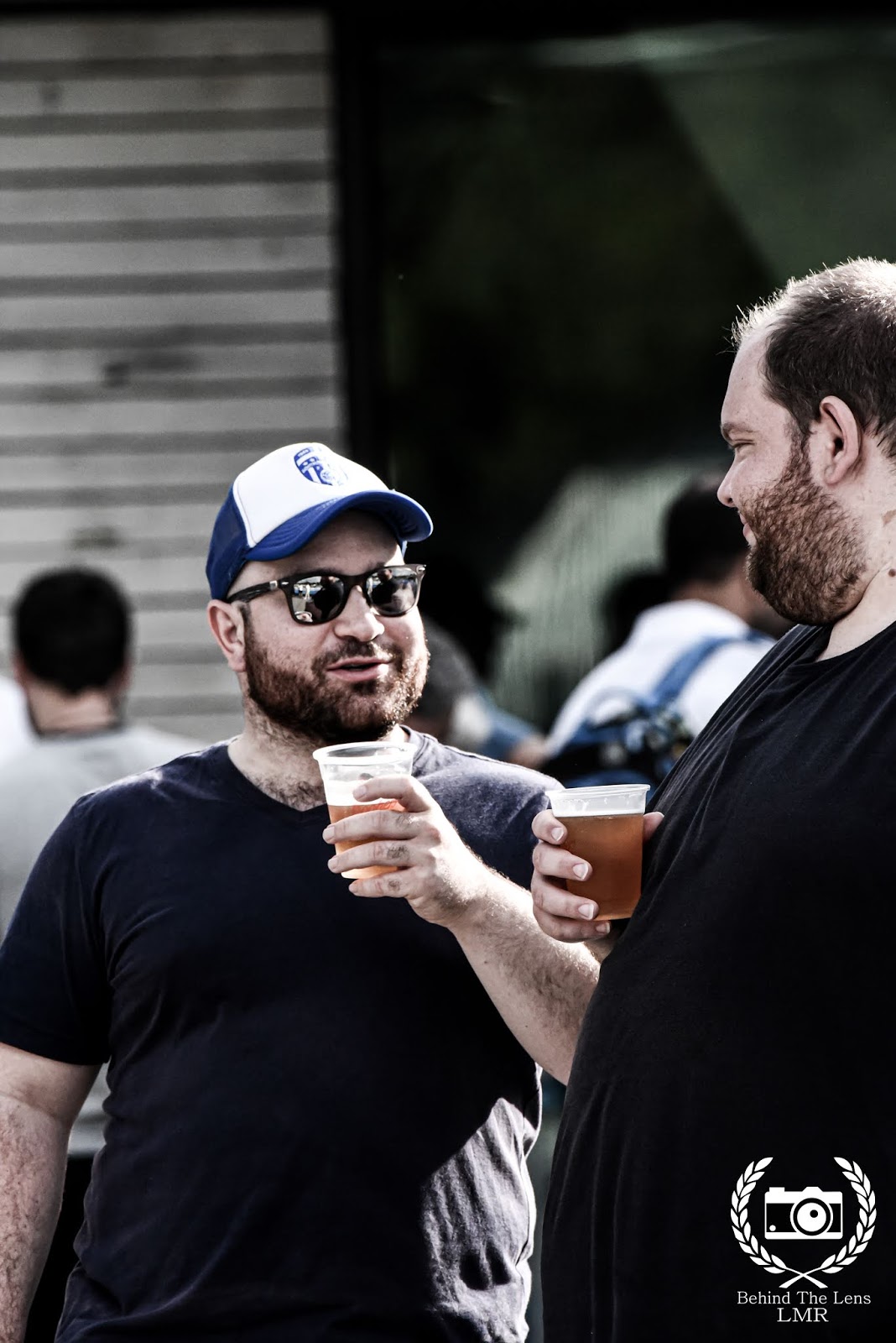
Irresponsible treatment of beer. Photo: Luke Radziminski.
Having taken the lead, we were rocked out of our very temporary complacency by Lions equalising with a free kick that didn't look all that convincingly taken at the time. Even looking at it afterwards, I don't know what happened, and why goalkeeper Pierce Clark seemed to latch on to it so late. We retook the lead very soon after, which only settled the nerves ever so much because, as noted above, Lions took another dangerous free kick, this time well dealt with by Clark. After a false dawn and a premature beer shower for a goal called offside, we eventually pretty much finished this game off with Sawyer's third, like his second goal a header from a corner. And the beer shower for that goal was at least legit.

Responsible treatment of beer.
Photo: Luke Radziminski.
Three first half goals essentially from corners then - one indirectly thanks to the penalty, and two direct, which is the kind of thing we didn't see enough of last year. Sawyer probably has a knack for this kind of thing, but by the Lions' assistant coach's own admission on soccer-forum after the game, the away side put in some terrible efforts at defending set pieces. Good delivery aside, and keeping in mind that scoring from corners is pretty much a lottery at the best of times, I just can't see us being marked that slackly for the entire rest of the season. Still, if any future opponents wish to be that generous, I'm happy to let them oblige.

The second half was pretty much a stroll - except for late substitution Matthew Loutrakis, who got a kick in the face from a Lions opponent - just waiting for that fourth goal to really make sure of it. After that came the fifth courtesy of a showboating team manoeuvre, which highlighted how poor Lions were on the day defensively. To their credit, the away team fought it out, but their lack of quality across the park was obvious for all to see. Not to disparage a club which has done exceptionally well to reach this level - nor to write them off after two games - but who were most of their players? A lot of clubs who make the step up end up recycling at least a few blokes who've been around the Victorian top-flight merry-go-round before; but the only names of theirs I immediately recognised were short-term ex-South keeper Keegan Coulter, and former South trialist and firebrand striker Amir Osmancevic.

As for us, it's been only two games, and yet I think we have a pretty good handle on what this South team will be able to do. Certainly not a front-runner, and probably lucky to make finals. Even though you never know what might happen, it's a squad with too much depth to be in serious relegation danger, especially when you have teams like Lions and Altona Magic whose budgets restrict them in what they'll produce. Goodness knows if well be able to produce anything in the middle channel, especially on smaller and narrower grounds - and this is what frightens me - especially if we fall behind. If we manage to go up, and force to teams to open up as they chase the game, we'll probably be the game

Next game
Oakleigh at Jack Edwards on Friday night, beginning our customary run of early season away games. No one's expecting us to win this game, and no one's expecting us to draw, and pretty much everyone's expecting us to get spanked; the idea behind that being, apart from Oakleigh looking good, that we couldn't beat them there even when we were good, so six losses there on the trot will become seven. I'd like to be more optimistic than that, but I'm struggling.

Alternative reality
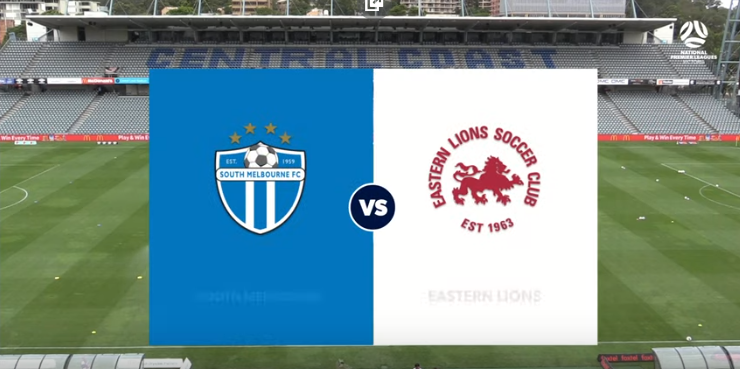
Why was the live stream initially displaying a backdrop of Central Coast Stadium? For those watching at home, it must've been a confusing affair. I know we did try and take over the Mariners a few years ago, including the farcical proposal to split games between Melbourne and Gosford, but callbacks to gags seven years ago seems a bit of a stretch. What's more, once the stream was sorted out, home viewers had to deal with the commentary stylings of Greg Blake, Australian soccer's one time sort of answer to Aussie Rules' Sam Newman - in the entertainment sense, not the try-hard non-PC gimmick sense.

Mispronunciations of player names aside - and the one person who was upset that Blake referred to South on several occasions as "Hellas" - the audience feedback on Blake's style seemed to be fairly split down the middle. People either loved it, or hated it. While I can see the appeal for some in Blake's schtick, I'm more in the latter mode. But I guess part of the appeal of the NPL live streams for those not of a gambling mindset is the variety of commentary styles - I like Dan Lonergan's energetic style for example, which a few people find too much like listening to footy or horse racing. Still, I wish Blake was quarantined to Heidelberg games.

Claim and counter-claim
I suppose the one good thing about last week's continuing coverage of our alleged wage theft was, if you can frame it that way, that it became so bogged down by claim and counter-claim that even the niche audience that was nominally interested in the story has mostly moved on. And in Australian soccer, there's always something new to latch on to and gawk at.

On an unrelated note, thank you Tony Sage.

But for us remaining South fans, our focus remains resolutely on South. Following on from last week's match report post on the blog, the club released a statement that in the famous words of David Byrne, had both "good points, some bad points". The good points? I guess for me that's mostly in noting that the players are on professional contracts, as opposed to the (implied) pseudo-amateur contracts that other clubs up and down the lower tiers have their players on. There's also the club's support for a more formal process for wage issues between clubs and players.

If you were in a more generous mood than I, you may also say that the club managed to pick up on the vagueness of the allegations made in Tom Smithies' article. An annoying aspect of that vagueness is that it was picked up on by some of our fans, who have pursued the I suppose logical extension of "why don't the players pursue the matters via legal channels"; an idea easily refuted by the fact that lawyers cost money, and for young players especially that's money they don't necessarily have at hand. And considering the relatively small amounts being alleged (admittedly not small to the players themselves), likely to be swallowed up by any legal action.

The bad points? The digressions into the allegations of conspiracy, which plays well to parts of our membership, but makes us look deranged to outsiders. The demand for a journalist to reveal his sources, which I guess someone drafting this press release must have thought was a good idea. The not coming out outright and saying that the club do not owe former players any monies, leaving that as an assumption rather than as a definite statement of fact. The club instead noted that it was "very comfortable with its position regarding all past and current players", whatever that means. I'm not good at reading between the lines.

Anyway, Smithies followed up his first article with another one, which notes that:
... it [Professional Footballers Association] is involved in "a number of disputes with South Melbourne" and that it is seeking the involvement of both FFV and Football Federation Australia after previous attempts "to resolve the matters amicably" had not worked.
Who knows how true this all is, nor who the relevant players are. As much as some of us would like to heap scorn on the committee, it is possible that everything is actually legit. Like the claims by former player Liam McCormick from a couple years ago that he was owed wages - this could all be a result of the current relevant players signing what they thought was simply a standard form with some boilerplate clauses, not realising what they were signing - even though the forms are pretty clear as far as I can tell. Because McCormack decided to put his name to his claim when this issue flared up in 2018, the club - apart from knowing it had the law (technical or otherwise) on its side - clearly felt comfortable in leaking McCormack's player release forms, damaging the credibility of both McCormack and Clement Tito, the journalist who wrote the article at the time.

This time none of these players has come forward, and thus it makes it harder for the club to just come out and use the same tactic, assuming that the relevant players have in fact McCormacked themselves, and assuming that the club is even sure who the relevant three players are. And surely a journalist with the seniority and experience of Smithies wouldn't make such a rookie error as Tito did, by trusting the word of the players without corroborating evidence.

What's strange and slightly counter-intuitive about this situation is that the real, original, and genuinely noteworthy story - Chris Taylor's win at FIFA, pending an appeal from us - has receded into the background. Taylor's successful (so far) litigation is, without knowing what's owed to anyone else that may be owed any sum of money, by any stretch of the imagination a much more tangible and newsworthy event than the (so far) small sums allegedly owed. Like the Avondale senior team wage spreadsheet leak from last year, this story offers a peek into the kinds of money being paid to run a senior team at this level, the kind of detail that mug punters almost never get to see. In that sense Smithies' article, which on some level appears to be an (understandable) opportunistic follow up story pushed by representatives of the ex-South players who allege they are owed money, is a much messier and "he said-she said" kind of situation.

As for fan responses, they seem to have generally fallen into three categories. Those who've used the story as an opportunity to bash South, and occasionally by extension the proposed national second division and/or ethnic clubs; those who have sought to defend the club, mostly South people but not always, seeing a witch-hunt and conspiracy against South, and occasionally by extension any notion of a national second division and/or ethnic clubs; but there's also a third faction, made up only of South fans - and most of whom seem to be on smfcfans.net - which while not completely trusting media reports on these matters, also do not trust the board and are unwilling to give the board and its version of events the benefit of the doubt. For them, having lost most of their faith in the trustworthiness of committees, it's going to be a long way back before they believe anything that comes of a South committee person's mouth.

If You Know Your History is back
Mine and Ian Syson's little radio show on Football Nation Radio has resumed for 2020. This year we're on Tuesdays at 8:00pm, but you can always catch up with whatever is we've been doing by checking out our blog.

Final thought
Wild scenes when one of Ian Syson's sons has been to a South game more recently than the old man.

Tuesday, 18 February 2020

Journey to the centre of the earth - South Melbourne 0 Heidelberg United 3

Photo: Luke Radziminski.
For those people who were worried that there'd be drastic changes to the South Melbourne experience in 2020, this game was endlessly reassuring.

Isolated striker? Check.

More wingers than you can poke a stick at? Check.

Blokes playing out of position? Check.

Gerrie Sylaidos getting subbed off too early, and thus any chance of central corridor play being used to get back in the game? Check.

Melvin Becket having high energy but no end product? Check.

No end in sight to our goalkeeping issues? Check.

Copping a goal and falling behind early, and having increasingly diminishing ideas about what to do to score after that? Check.

Now there were things about this performance that I did like, mostly from the first half hour before we conceded the opening goal. I think the wingers we have on hand are faster than we had last year, which at least gives you a tactical option independent of skill. Provided he aims for raw power over swerve, Stephen Folan looks dangerous from free kicks. Harry Sawyer works hard, and I want to see him in a team that looks more organised before judging his skill. Lirim Elmazi was very good in his South debut, and looks an excellent pick up.

But everything else was all too familiar. After several successful seasons, Heidelberg are in a transition period, having seen much of their regular squad depart and a lot of new faces arrive. And by a Berger insider's admission (made while we were having a chat on the tram after the game), it was the worst or weakest Heidelberg side for about a decade. And their own performance never reached any particularly great heights, except for their finishing.

Someone piffed a flare over the fence near Gate 1 towards the end of the
 game. Who knows why they bothered. Photo: Luke Radziminski. 
But tactically we were outdone once again. Once Heidelberg took the lead - somewhat against the run of play, not that that makes things better - they were content to sit back and absorb our increasingly flimsy attacks. Once Sylaidos was subbed off around the hour mark, things got worse as we retreated exclusively to the wings, and the Bergers were happy enough to squeeze us onto the touchline. We got past the squeeze on occasion, but then our crossing let us down.

So it might have been a bad day, a bit of bad luck conceding the first goal, and a scoreline made worse as a result of having to chase the game. These things happen, and maybe 2020 won't be a replica of the last two years. A couple of inclusions to the midfield spine, like Luke Pavlou or even Marcus Schroen, and maybe we won't be so one-dimensional and reliant on Sylaidos having to do everything in the middle. Maybe some better crossing.

Oh god, we're one game into the season and I'm already into "if this" and "if that" scenarios.

Next game
Eastern Lions at home on Sunday. Were it not for Avondale's point deduction, these two teams would be last and second last, but as it is, Lions are ahead of us and out of the relegation zone by virtue of alphabetical priority.

Digging deeper still
While some South fans on social media have rightly caned former supporter of the club (and now cursed apostate) George Calombaris for the wage theft proclivities of his businesses, the old wisdom of "be careful what you mock, lest you become it" has sprouted its head again -  and because it seems that they're not cognisant of the fact, that goes for fans of other clubs too, who are enjoying this bit of schadenfreude.

Because over the past week or so our own alleged shoddy behaviour when it comes to paying wages has come to fill out newspaper column inches, and all you can do is hope that it's all very, very wrong, and that the players who are still with us or especially those who have rejoined us are incredibly naive or know something that we pleb fans don't.

But past examples like Kevin Nelson and Adam Van Dommelle successfully claiming moneys owed to them by us (and perhaps others who were naive enough to sign a waiver when seeking a transfer out) don't fill me with much confidence that the club has learned anything from prior experiences.

First up is the still(!) ongoing matter of Chris Taylor's sacking. At various points since Taylor's dismissal in early 2018, South Melbourne Hellas supporters have been told by the club that Taylor was owed nothing more than the week's notice he was paid out upon his sacking; and furthermore, that Taylor's attempt to take the club to a FIFA tribunal (if the club admitted that such a thing was actually happening) was unlikely to succeed.

Well, news came in last week that Taylor had won a FIFA tribunal case which states that he must be paid out approximately $80,000. The article does note that the club is considering taking the matter further, but boy, what another dent to whatever's left of our reputation. To be fair, we weren't the only club named in the article - Sydney Olympic also got its comeuppance with a coach it had sacked - but at least Olympic were able to say that they'd won a championship in part because of that decision.

Meanwhile, we've floundered in a mess of our own making, with high player turnover, poor morale, and no discernible middle let alone long-term on-field direction. Now maybe the decision to sack Taylor was absolutely necessary, even though those of us outside the board meeting which made the decision will probably never know either way. But it does show the perils of giving anyone, even someone as capable and as successful as Taylor, a five year deal in the first place.

Of more immediate concern is what this means for the club in terms of its finances and its alleged liabilities. Much was made at the recent AGM of the deep audit made of the club's books, and the plans to pay off the club's debts. Now here's another one, to be paid for how? With more director loans? And if you believe even some of what's being said out there, there's possibly another coach looking to be paid what they're owed, as well as persistent talk about players being owed money, and who knows who else.

In the Daily Telegraph it's being reported (behind a paywall which I'm not sure how I circumvented this time) there are at least three players seeking money they believe is owed by us. Just as concerning is that in terms of the comments made by public officials from various angles on this matter, there's no way of getting around that what the club is saying doesn't match up with what representatives from Football Victoria and the Professional Footballer's Association are saying.

While South president Nick Maikousis is (according to Tom Smithies' article) claiming that "Our governing body, the FFV, has not made any comment or contact in relation to these matters, nor has the PFA" the PFA and Football Victoria CEO Peter Filopoulos are on record as saying that the opposite is true. And matters aren't being helped when Maikousis attempts to turn this issue into one where the club is the victim rather than the players who are owed their rightful wages - which Maikousis unhelpfully says add up to "a relatively small amount". If the amount owed is that small, then why not pay what's due and avoid this drama?

Now there's little doubt that we are the only club at this level that will fall behind in wages at one point or another, while other clubs are paying wages far beyond what is appropriate and sustainable for this level. But until we enter a league or competition with some semblance of cartel discipline and a sustainable operating model, all we can do - all that we should do - is make sure that we operate our own business in a proper and dignified manner that avoids such things becoming an issue.

And if that's not possible in this post-shame world, than at least start backgrounding journos off the record about the shonky behaviour of other clubs, and get them into the limelight as well. The next members' forum should be interesting.

Reaching new depths
On field, off-field, in the kitchen - is there anything this club can do right at the moment?
I'm not one to dedicate too much time to the food that clubs offer, so long as it's relatively prompt and more than nominally edible. Now I can't see the former being solved any time soon at South, but at least the burgers have been good enough. But the souvs? The souvs have been ordinary for a while now, and I made the same mistake that local soccer commentator Chris Gleeson made last week by ordering one. How could they get everything about it so wrong?

The souv was so bad that we've sunk beneath the old "don't eat at Green Gully" level. The bizarre thing is that a solution to their problem of mushy pita and indistinguishable meat content is right there in front of them - ditch the pita except for those ordering a plate meal, and use bread rolls instead with the lamb skewers on the menu instead of whatever it is that was passed off as meat last week.

Maybe we should hire Calombaris to work in the kitchen - it might not solve the wages issue, but it might at least solve the food issue.

Final thought
I find it funny - but not "haha" funny - that after all the effort that went into pushing the A-League bid and trying to draw attention to ourselves, often in the most shameless ways, that we'd complain about someone writing an article about us because they're out to "get" us.

Thursday, 13 February 2020

Death and its malcontents

I'm tired of the old shit 
Let the new shit begin
Eels - Old Shit/New Shit
I had begun writing up a post about last week's final friendly, but it was maudlin and stiff to the point of self-parody. Normally that would only bother me a little bit, but there are times when I feel like I've pursued that angle as far as it will go, and that I need to lay off it lest the blog becomes emotionally monotone - especially when there's a whole season to go, where we can all be as pantomime miserable as we like.

So before re-writing the sections I'd already written, I thought I'd write the thing that I should have been writing about in the first place, that being the reason for my break.

Three weeks ago, my father died.

He had been battling pancreatic cancer for the better part of a year, and for most of that time was holding up relatively well; but as was explained to me by the oncologists in what turned out to be the final couple of weeks of his life, at some point the body can no longer fight the fight. The blog's hiatus came on the day before his death, though at the time I only knew that dad's time on this earth was limited, and not necessarily that his end was imminent. So it goes.

I could write about my father's life in great detail, but my telling of it would be incomplete, and besides which, this is not really the place for it. Suffice to say, he was born and raised in difficult circumstances, worked a series of back-breaking jobs throughout his life, and spent most of his life - 49 out of 72 years - in a country he never was able to quite get his head around. It's a story a good chunk of my readership will be all too familiar with.

But there was joy, too, and one of the things that brought my father joy was soccer. His village in Greece, now close to collapse from population decline, was large enough then to have its own soccer team, and in one way or another dad's interest in the game remained for the rest of his life.

Arriving in Australia in 1971, the football scene he saw here was past its 1960s state league peak, but it was still healthy enough for there to be good players and good entertainment. Dad picked Alexander as his club not because he was from the north of Greece - though that became more important later on - but because when he first arrived in Melbourne he lived in the inner-north, in Collingwood. It was about as good a time to get on the Alexander bandwagon, as for the next decade or so they would be at their peak. Later the combination of distance (it's a fair hike from Altona North to Olympic Village), work and family commitments (my brothers have no interest in sport), and off-field politics (Macedonia issue, NSL and Soccer Australia bull-crap, internal club stuff) which gradually wore down not just the Bergers as a force, but also my dad's diminishing optimism about the game's prospects.

Thus he gradually drifted away from the local game; never completely losing interest, but never doing much to reverse that trend. When I came back to South in 2006, dad came with me for a few games, but eventually for all sorts of reasons - not least because I'd managed to attach myself to Clarendon Corner and the smfcboard bunch - his attendance at the soccer became minimal. He would still keep up to date via the Greek papers and radio, but most of his interest in soccer regressed to what was available on free-to-air TV. For a while there in the early-to-mid 2000s, I was headed much the same way, but turned that around in a story I've related in a number of places already.

My love of the game exists both because of, and in spite of, my father's relationship to the game. It exists because of his love for the game, because the game as it was for a good chunk of his first twenty years in Australia, contained a language he understood both in terms of what was happening on the field as well as off it. It's not that he didn't like Aussie Rules, but he had no cultural connection to that game. I only went to one footy match before I was 18, and that wasn't with my dad. When we went together to see a sporting match, it was inevitably a soccer match.

So we went to soccer matches. At Paisley Park initially, where we saw Altona East win the Hellenic Cup on its home turf. Then to Middle Park and Olympic Village and Olympic Park, and even after the Bergers were kicked out of the NSL, he would take me to South games at Lakeside. Dad had the habits a lot of his generation had. Park miles away from the ground and risk a parking ticket instead of paying for parking; never pay for a grandstand seat; always time your run to get to the ground five minutes from kickoff, and always start getting ready to leave five minutes before the end of a game, regardless of the score. So many of these things infuriated me, and still do, but it's just the way he was, and none of my nagging was going to change things.

Besides which, I had found my own way to annoy him. I became a South fan instead of a Berger because I saw the 1991 NSL grand final on TV, and because the team did well after that, too, and because there were enough nearby relatives at the time who were also Hellas fans to keep me attached to that. The novelist Christos Tsiolkas relates the story of how the first time he disappointed his father was when he chose Aussie Rules over soccer, and I guess my picking Hellas over Alexander was something dad could never quite get over.

Dad kept that feeling buried pretty well though, still taking me to South games when he could, and using the line (that was only a half a lie) that watching a good game of soccer, and watching talented players, was more important to him than his team winning. He'd use the examples of someone like Ulysses Kokkinos, or Branko Buljevic, or Dusan Bajevic when he came out here with AEK. The Bajevic example he loved to roll out a lot - on that day the Olympic Park pitch was a mud bath, and yet Bajevic came off the field without having gotten dirty at all. Why? Because Bajevic refused to make an idiot of himself and chase balls when people should have been playing the ball to his feet.

But when I say it was only a half a lie that dad preferred entertainment and quality over the glory of victory, it was because deep down my dad really was a Berger tragic. In 2008, the Bergers' 50th anniversary season - and probably the last proper Bergers game my dad went to that I can remember - the home team came from behind and beat South 2-1. As their second goal went in, he smiled in a way that I hadn't seen him ever do, and he even did a little fist-pump. I didn't even know that he had a fist-pump in his gesticulation repertoire. The ride home in the station wagon from the Village to Altona North was almost unbearable for the smugness in that Kingswood, the years of being humiliated by South during the 1990s melting away for him during the trip back.

But our trajectories as followers of local soccer nevertheless drifted further and further apart. He had a passive aggressive tendency, too, with my attendance, especially because I would take public transport to most grounds. He both wanted and was happy for me to to go all sorts of soccer games; but there were also times when he was befuddled by the notion of my taking a lengthy public transport journey, which would see me return from the other side of town in the early hours of the morning. "Why do you need to go, when there'll be other people there? Does the team specifically need you there?"

And like a lot of the older generation, if it was raining, so much the worse! Why would someone deliberately go out and get wet for no good reason? And don't get me started on what he thought about anyone who would be stupid enough to volunteer at a club, and especially anyone who trusted anyone on a committee, ever. At some level, what my dad would've considered as my crazy and now decade-plus renewed dedication to South Melbourne Hellas and soccer - in terms of attending, writing, and thinking - is my attempt to make up for lost time, and to avoid becoming so jaded that I stop caring about something that matters to me so much. I'm trying to make up for all those games I didn't get to see during the NSL years, for all the soccer friends I didn't have in the 1990s and early 2000s, and for the culture I was not as connected to as I wish that I was.

It's also my attempt to not fall into the trap of self-defeating cynicism that my father fell into. My friends and readers will know that I love to complain, that I instinctively first see how things could go wrong instead of how things could get better, and that I am prone to being openly caustic; but I've seen the alternative, and I'd rather be attached to the glorious mess of Australian soccer than be apart from it. In other words, unlike my dad and so many of his generation - and later generations - I'd rather be mumbling to others at a ground that things will never get better, rather than sitting at home mumbling to myself that things will never change.

But we still talked about all the off-field and on-field happenings, and we would still watch most of the major world tournaments at our disposal. I remember him taping Greece's first World Cup game in 1994 against Argentina, and then when I woke up and asked about it, him telling me it was not worth watching because we'd been smashed. I remember sitting in my uncle and aunt's lounge-room in 1997, where in the only time I ever believed he had any clairvoyant ability - because he'd make these kinds of predictions often, whether one way or the other - he picked Iran's coming back from 2-0 down.

We were both stoked when Australia finally qualified for the World Cup, and like everyone else we watched the Socceroos with awe in Germany, and with less awe in later World Cups. But the best time was probably the 2014 World Cup, where we stayed up late and woke up early and I watched far more of a World Cup than I ever had before, and my dad became a sort of ancillary character in my sleep-deprived narration of events, waking me up for games, and supplying me with tea and biscuits.

The final confluence of our soccer interests was the most unlikely set of circumstances I can think of. Throughout my extended career as a university student - a botched stint at Melbourne University in 2002 and 2003, and a much more successful stint from 2007-2018 - the things I was studying almost never came up in discussion. When I was writing my doctoral thesis on Australian soccer literature, for the first three or so years of that he must've just assumed that I was doing "something", but who knows what. But one day he asked what it was that I writing on, and after I'd explained it his face lit up and he started talking about his own poetry.

Now I knew that he had once fancied himself a poet, and that he had been published in Neos Kosmos in the early 1990s, writing poetry on a variety of subjects - such as the commercialism of the modern Olympics, and the Macedonia issue - but the key here was that he remembered that he'd written a soccer poem, an ode to Heidelberg United Alexander while they were having a difficult season. Not only that, but it had been published in Neos Kosmos in an abridged form, and a Bergers committee member had seen it and was so moved by it that my dad was offered a double pass to their next home game.

But that wasn't the whole of it - dad had also written a poem on what he saw as the unjust sacking of Jim Pyrgolios as Hellas coach and Pyrgolios' replacement by Frank Arok; as well as a lengthy poem on Altona East PAOK's Hellenic Cup win in 1992, which was printed and placed on the window of the wooden portable which was then PAOK's social club space. The Pyrgolios poem and the PAOK one survived in draft form, but the Bergers one I was never able to trace down a complete version of, except for a couple of stanzas in a draft. Maybe when Neos Kosmos completes its digitisation I can finally find the rest of the poem.

Now to be honest, the quality of dad's poetry was firmly in the category of doggerel; but since one of the points of my research was its focus on what existed in terms of Australian soccer literature, rather than the quality of what existed, I was stoked to learn about his soccer poems, and that some of them had survived. I transcribed the remnant drafts, transliterated them, added them as an appendix in my thesis, and cited the poems as works and my father as a writer in the main body of my thesis. I used my dad and his work specifically as an example of how hard it was to find examples of Australian soccer literature by non-English language writers, but also how important it was when one did find examples of them.

Passing my doctoral thesis was an ordeal - I had wildly disparate examiner's reports - so the day that I got notice that the third examiner had passed me with minor corrections, I was more relieved than elated. But the day I graduated was a joyous moment, because I got to share that with my dad, having written a work which had him in it. Like many of the people who followed soccer in this country, my dad's experiences, memories and thoughts of the game will soon be lost. It's in Australian soccer's DNA that we keep forgetting the past, and keep attempting to re-build Troy on top of the rubble and ashes of the cities which  came before. And the nature of most theses is that once they are finished, they will soon fade into irrelevance or insignificance - but knowing that I was able to preserve my father's work and part of his life in some format was reward enough for the effort.

As for last week's friendly...
Returning for my first bit of South Melbourne action for the 2020 campaign - or more correctly, preparation for the 2020 campaign - I felt that not much had changed in the months since I last watched a South game. The greeting at the door before I pick up membership pack was the same.  There were the same old faces sitting in the social club, and later watching the game, in this case a friendly against NPL2 side Northcote. Not everyone was there - more will be back this week - but there were no unfamiliar attendees except for the subbuteo faction on the futsal court, and even they've been there before.

If there were changes to be noticed, they were subtle ones. The complimentary scarf is longer than usual. The faces behind the bar are a little different, but they're still pouring spirits somewhere between a shot and a free-pour. The burger is much the same, including the wait time. At one point, social club manager Vic had Clutch(!) on the social club's stereo system. Outside, the sun-and-rain-bleached blue of the athletics track has been touched up to be of a more robust royal blue hue, while the city skyline to the north was clouded in smoke.

But the meaningless of the hit-out, bushfire relief aspect notwithstanding, was much the same. Whether pre-season form is magnificent or disastrous, there is no oracle which can reliably predict what it will mean for the season proper. But I asked those who had been to more pre-season games than I had this year to offer their assessment of what they've seen anyway, even if I knew that the answers would be non-committal. The most optimistic refrain was that it seemed that at least the team no longer hated each other and themselves which, if true, would be a step up from last season and the season before that.

Then again, give it five minutes and anything could happen. It's a very long season and a very large squad, and all the woodfired pizzas in Shepparton might not be able to prevent internal schisms should things go wrong.

On the field, I don't think it was a full-strength line-up for us. Peter Skapetis was out there, and initially at least he ran harder than I'd seen him do at any point for us last year. Chris Irwin played further up the field, as a pure winger, than he usually did during his previous stint with us, where he was much more likely to be used to as a wing-back. Harrison Sawyer is big, runs hard, and has spindly legs that I predict he will repeatedly trip over, Melvin Beckett looked exactly the same as last season, a lot of sizzle and not much steak. Marcus Schroen was not out there, so someone else was taking corners, free kicks, and penalties.

The tempo was high throughout the friendly, but you know what I think about high tempo at this level - that it's the Max Power Paradigm - not the right way or the wrong way, but rather the wrong way just faster. Both sides created a ton of chances in part because of this high tempo, which has freaked out the kinds of people who treat pre-season friendlt games against lower tier opposition in which we don't run them into the ground (with what I assume is nowhere quite near our likely starting eleven) as an ominous portent of doom for the coming season. Of course, had we belted our NPL2 opposition, the calls may have been that it was not a real hit-out against a comparable opponent. I say let's just wait for the Bergers to bury us on Friday night before we get legitimately panicky. 

Aside from what has been happening on the field, it has been as low-key a lead-up to a Victorian top-tier season that I can remember, apart from the bizarre Avondale points deduction which happened very late. There is no buzz. It's not just us, either - pretty much the whole league, and the federation, too, has approached 2020 as if there is nothing to get excited about, nothing to look forward to. Of course it doesn't help matters that most teams in this competition have no fans to get excited about anything, but even those clubs with what might be classed as "actual supporters" have mostly been quiet.

So is this it? Is this the end, the point where everyone finally, genuinely acknowledges the futility of state league football? One can only hope, though we'll have probably have to wait until after the game against the Bergers to be sure.

It's official
I am glad to say that I am once again officially accredited by Football Victoria to provide the public with South Melbourne Hellas nonsense. Also other nonsense, too, I assume, but I'll have to check the accreditation agreement.

Tuesday, 21 January 2020

Taking a brief hiatus from the blog

Dear South of the Border readers,

Due to my having to take care of some pressing personal business over the next little while, the blog will be going into hiatus for the next few weeks.

I will also be significantly reducing my social media presence during this time.

However, those of you who wish to contact me during this break for whatever reason can still do so through the usual channels, and I will get back to you when I can.

Thanks again for your support over the past 12 years, and I look forward to returning to the blog and to being with you on the terraces sooner rather than later.

Paul


Thursday, 16 January 2020

Two roads diverged in a yellow wood (the ambient noise is Furlong Road)

When it rains, it pours, and haven't we seen that play out this week? Everyone (except me) panicking about a lack of pre-season friendlies, and then: BANG! Two friendlies announced on the same day, and for the same day! Like some ill-prepared undergrad rushing to get their essays in at the last minute, fuelled by the kind of adrenaline created by the terror of imminent failure, the club is going to play two games within hours of each other on Saturday to make up for lost time. The games will see our bloated - and I'm not going to add any mealy mouthed adjectives to sugarcoat that fact - senior roster split into two squads, but don't ask me which one will be the stronger. If this arrangement achieves one thing though, it proves that the club can actually set up a friendly without having to worry about "everyone" having already settled their pre-season schedules. Oh, and the details for those two games? Saturday at noon at Gully against Gully, and later that evening at 5:00 against Magic at Springvale White Eagles. I won't be at either affair, so if someone wants to summarise events after the fact that would be nice, or else I'll be forced to cobble together something from what people say over social media. The next and very obvious step for the club after this is to set up two games at the same time at the same location with two different opponents, but in true hack American sitcom fashion (and that includes you, too, Frasier) having told neither of said opponents of this arrangement, with players and coaches rushing between two adjacent (but also obscured from each other) fields in order to try and pull off the scam, only for the two parties we've been trying to court to become savvy to the shenanigans, and for us to only realise too late who we "really" wanted out of the two, while being left with nothing because of our inherent indecisiveness, and the need for all classic era (read: before the crippling emergence of post-post-post ironic post-comedy) sitcoms to reset before the next week's episode.

Tuesday, 14 January 2020

Welcome to 2020, belatedly

Hello folks, apologies for the lengthy gap between updates. I'd have written sooner but a) I have been busy with other things, and b) there has been a whole lot of nothing happening in the South front. With regards to the "being busy" factor, I'll say more on that toward the end of this blog post; but as for the whole lot of nothing that has been happening, we might as well begin the year by summing up what has been happening since I last posted.

Squad update
After having being rumoured to have signed with South soon after the end of the 2019 season, goalkeeper Pierce Clark's name was not mentioned except for laypeople asking variations of "didn't we sign/aren't we going to announce the signing of Pierce Clark?".

There was that much radio silence from official and unofficial sources that the people still paying attention to South in the quiet months had given up on getting Clark, and had instead moved on to figuring out which of Scylla and Charybdis would win the starting keeper's role.

And then on Christmas Day(!) the club announced that Pierce Clark had indeed signed for us, and now the speculation is not about who will be number one, but which of Nikola Roganovic and Josh Dorron will be number two.

Irish defender Stephen Folan has arrived after getting married, so I guess pretty much everyone who's relevant is now involved with the beginning of pre-season proper, which saw the squad trot off to Shepparton for the week.

Of course I'm interested in the procedures for dealing with the smoke haze during pre-season, and what effects that will have on the squad and its preparation for season 2020 - something that all clubs will have to deal with.

But of course we're also waiting for friendlies to start so we can hang out hats on completely meaningless observations of pretend actual play in the event that our pre-season form doesn't correlate with whatever happens during the season, while getting our "I-Told-You-So" voices ready for those moments when one of our scattershot January opinions turns out to be true.

2020 SMFC senior squad roster as of 07/01/2020
There just might be too many categories listed below.

Signed
  • Daniel Clark
  • Lirim Elmazi
  • Stephen Folan
  • Chris Irwin
  • Amadu Koroma
  • Perry Lambropoulos
  • Matthew Loutrakis
  • Jake Marshall
  • Josh Meaker
  • Brad Norton
  • Luke Pavlou
  • Harrison Sawyer
  • Marcus Schroen
  • Gerrie Sylaidos
  • Giorgi Zarbos
Played for us in 2019, but now on the payroll in another guise
  • Luke Adams
I'm not any good at putting names to faces, but I've seen them in photos, so I assume they're hanging around 
  • Melvin Becket
  • Nick Krousoratis
Battle to the death to decide who gets to be Pierce Clark's number two
  • Josh Dorron
  • Nikola Roganovic
  • Peter Skapetis
Played with us in 2019 and people are assuming they'll be back for 2020
  • Ben Djiba
  • Zac Bates
Played with us at the end of 2019 but who knows about 2020, though I'm assuming they're gone
  • Keenan Gibson
  • Amir Jashari
'They' say that he's not coming back for whatever reason
  • Kostas Stratomitros
Apparently at Kingston
  • Manny Aguek
Spotted at a training session at Jack Edwards last month
  • Pep Marafioti
Has he even been in Australia since early in the 2019 season?
  • Andrew Mesourouni
Last time anything was heard from him, he was "exploring options in India"
  • Billy Konstantinidis
Out
  • Tom Aulton (Brisbane Olympic)
  • George Gerondaras (Kingston)
  • Kristian Konstantinidis (Northcote)
  • Leigh Minopoulos (Essendon Royals)
  • Will Orford (Western Pride)
Where are the friendlies?
Apparently there's some sort of friendly session with Moreland City tomorrow evening at Darebin - mostly featuring our kids - but I haven't seen anything on the club's Facebook or Twitter, and I don't use Instagram, so I'm going to pretend that nothing formal has been arranged yet.

The lack of friendlies and the super low-key pre-season business from our end has begun causing some angst among our supporters, some of it probably genuine concern and some of it fueled by less noble motivations.

But let's look at it in some context. By this time last season we'd had three December scratch matches, and one in January. By the time we reached the beginning of the season, we'd played another eight friendlies, had no striker, and rocked up to games where we'd be gassed by the 75th minute.

So while I'm no coach and no conditioning expert, and certainly no athlete with any sort of knowledge of what constitutes "match fitness", I'm willing to let it go for the time being. What's the worst that could happen?

Public transport guide updated
I've updated and streamlined my public transport guide. I've gotten rid of the map screen-caps, dispensed with most superfluous routes, and tailored details specifically to myself and any other South fans who may end up taking public transport. If supporters of other clubs find the guide useful, good luck to them.

I've also been brutal in my estimation of some of the grounds and their respective match days, basically telling anyone who'll listen to not bother. Thanks also to the anonymous comment leaver for adding a couple of suggestions.

Match programs and memorabilia
A reminder that South of the Border is still looking for South Melbourne match programs. We're also looking for old footage and audio recordings to upload to YouTube, as well as photos of old memorabilia that we can add to our 'artefact' segment. I know that you people have this stuff.

Contribute to South of the Border
As usual, South of the Border is always on the lookout for new and old contributors, on both an ongoing and a one-off basis. So, you know, if you want to write something for us, send us a message and I'll see what I can do to make your dreams of writing for this prestigious publication come true.

More seriously, without wanting to second guess what's going to happen in the future, circumstances are such that I could be absent from a lot more South games than I usually would - and my usual seasonal absentee record stands at about either zero or one game per season.

That being the case, I'm letting my readership know to get their typing fingers ready just in case - in the past I've had people pitch in and do a splendid job with fill-in match reports. I am certainly already looking for people to write up summaries of whatever South Melbourne pre-season matches they end up going to, because I can't see myself making too many of those.

Thursday, 26 December 2019

Has it really been 12 years? Yes, it has.

Let me be blunt - 2019 sucked. I doubt that next year will be much better, but we'll see. Anyway, there are people to thank, so let's get to that.

Thanks to Luke Radziminski and Cindy Nitsos for putting up photos that I was able to borrow for the blog, and to Luke Patitsas for starting his own South blog. Thanks to those from whom we sourced more Hellas match programs.

Thanks to our readers and comment leavers, and the people who gave me and Gains lifts to stupid out of the way grounds which are poorly serviced by public transport.

The one unequivocal positive on a personal level was working on If You Know Your History, and so I'd like to thank again everyone involved with that.

Oh, and big thanks to those responsible for finally getting the pompom beanies done.

As usual, thanks to Gains for being the only other consistent member of the Public Transport and Cheap Eats faction.

Wednesday, 25 December 2019

Notes from the 2019 AGM

As tends to happen, my recollection of Sunday's events will be based less upon the order in which things happened, but more so via theme.

The two AGMs - South Melbourne Hellas and South Melbourne FC - were held back to back without a break. Proceedings started on time, and finished after about an hour and a half. The mood was neither sombre nor muted, but neither was it particularly combative (except for one gentleman). Missing also from the AGM was any sense of mirth - often times during the Leo Athanasakis years, no matter how riled up the members would get, there'd usually be at least one joke that would come out and leave everybody a little less upset.

But welcome to South Melbourne in 2019, where the AGMs - for the time being at least - are likely to be more serious in form and content.

Elections were held for both boards, and the results were the same for both committees - the same eleven nominees filling the eleven vacancies. There were some new names replacing some old names, as well as replacing a few names I didn't recognise.

There was not a huge attendance, which was as expected considering the timing of the event just a few days before Christmas, but apparently there were enough in attendance to form a quorum for both meetings; though there was quibbling about whether a quorum for a South Melbourne Hellas AGM is a set number or a percentage of the membership, which is for someone to go through and check at some point. For the board's part, it was noted that they had promised the 2019 AGM would be held before Christmas, and they followed through on that promise, despite some self-admitted duress in fulfilling that promise.

There were several notable absentees in terms of our supporters, but there were also a few notable missing board members - I'm thinking specifically here of football director Andrew Mesourouni. Or maybe I just didn't recognise everyone's face. Of the board members present, only president Nick Maikousis, chairman Bill Papastergiadis, and treasurer/secretary Mario Vinaccia were involved in providing extensive reports on their portfolios; even the election returning officer Skip Fulton was heard from more than most of the other board members.

There was a moment taken early on to acknowledge Ange Postecoglou's success in winning the J-League title. The club's chief sponsors were also thanked.

It's a cliche to say so, but 2019 was unequivocally a transitional year for the club. In 2019 we were still coming out from the other side of the Chris Taylor sacking, including shedding even more of the senior players who had been with us during that successful period; the women's team also lost a swathe of experience and talent, and went through a number of coaches; and this AGM came after the first full season since the end of the 11-year presidency of Leo Athanasakis, who was not present at this meeting.

Despite not being officially the club's treasurer during his presidency, in the past few seasons Athanasakis would nevertheless perform the duties of providing the treasurer's report, which certainly had some people asking in the past (and in the present) what was the point of even having a treasurer if Leo was going to provide the report? Anyway, now that Mario Vinaccia is unequivocally the club's treasurer (as well as club secretary, which does seem like one job too many), we received what was promoted as a financial report that was prepared by the named treasurer.

To that end, Vinaccia provided what was perceived by the members as being a 'more' thorough report of the club's accounts than perhaps they were accustomed to. Turnover was down by a noticeable amount, but this also took into account a number of factors.
  • There were fewer functions, and these functions tended to raise less revenue.
  • The impact of live streaming and the senior men's team's erratic form.
  • The fact that the previous season's financial report also included the somewhat artificial boost of the FFA Cup run (which included several home games aside from the Sydney FC one), and the Guangzhou R&F visit and its associated function.
  • The decline in prize money from the lack of the men's team's success.
  • The shift from running the social club ourselves, to outsourcing its operation to an outside operator.
  • The discovery, via a thorough audit of the club's accounts by Vinaccia and the club's long term auditor, of what could at best be called 'previously unknown/undiscovered' debts.
This audit, which took the entire year to undertake, has made the board much more aware of what its financial position actually is. As for the debt taken out by the club to finish off the construction of the social club, the club is aiming to pay that off next year. It will, of course, be interesting to see what the club's books look like without that bank debt, and with a second year of this administration looking after the books.

Circa 2021/2022, the club's annual stipend from the government is due to be reduced, and thus progress will need to be made to make up the shortfall that will eventuate. Nevertheless, the board emphasised the control of signage at the ground, and its renewed efforts to attract more sponsorship and corporate support, as part of the club's overall efforts to remain fiscally healthy. The club has also seemingly made a more sincere effort in applying for grants, and it is investigating the possibility of what might be achieved via the Australian Sports Foundation.

In terms of the club's operating structure, it was mentioned that all board members will also now be directors, though for some reason I was under the assumption that that was meant to be the case anyway. Another element of the club's pivot away from the Athanasakis-era Triumvirate style operation is a proliferation of sub-committee and advisory type arrangements. There were several well researched questions asked from one member about lax record keeping at the club in terms of governance structures, as well as associated regulatory compliance - this line of questioning was good in that it was not merely accusations of poor internal mechanisms, but also letting the club know where and how it could improve, what needed to be remedied.

As had been noted at an earlier members forum held by the club, Football Victoria's live streaming has cost the club significantly on the match day revenue front. While there have been some minor cost savings in our media department because of the live streaming, they have not been near enough to making up for lost match day revenue.

Cutting the costs of hosting during senior men's match days is part of the rationale of moving our games to Fridays and Saturdays, and the under 20s out to Darebin. The SSCT staff costs, as well as that of security, accrues significant penalty rates for weekends, especially Sundays. However, another part of the rationale for the shift in days is an attempt to attract more corporate support.

The club begun the process of holding more frequent member information nights and forums, and the plan is to hold the next one around March. It is arguable that these non-AGM sessions also cut down on the time spent at an AGM, and hence in part the short duration of this meeting. There will be a renewed focus on club functions, miniroos, and attempting to restart/revive a past player association. These elements are important not just from a revenue raising standpoint, but from the point of view also of trying to revive the sense of South Melbourne being a 'club' in the true sense, after years in which it could be argued that these matters had been left to deteriorate to an unacceptable degree.

Among the other things discussed. The departure of senior women's team coach Mick Gallo was explained as being more or less due to irreconcilable differences - in this case the club had one view of what Gallo's role should be, and Gallo had another. A Dorothy Dixer from the floor asked what money the club had spent in its A-League bid - with the answer being, for the record, 'zero' - the bid was funded by several board members of their own volition.

Apart from the need to rejuvenate our Miniroos component, there were no reports on the health of our youth system - with the exception of noting that we were close to securing some kind of deal with Parks Victoria with regards to the pavilion near fields 18 and 19 in Albert Park.

There was no discussion about prospective player signings for either the men's or women's team. There was a question about the process that led to Esteban Quintas being appointed senior men's coach for 2020, with the answer being that the club considered that he was the best available to the cub at this point in time. Discussion on the appropriateness of hiring the inexperienced (from a coaching point of view) Luke Adams as an assistant coach more or less went around in circles.

 There were no firm commitments as to where the club hoped to finish on the table next season. There was little talk of the proposed second division and/or promotion and relegation. Maikousis stated that it was the board's aim to hold the next AGM by the end of November next year, in line with constitutional requirements, legal requirements, and the expectations of members.

Friday, 20 December 2019

Help identify the opponent

The folk at Heidelberg have unearthed some old footage of South Melbourne at Middle Park from the mid-1970s. They've posted a snippet online, but the identity of the opponent (in the blue shirts - South is in the white) is unknown.

Can you help identify them? The only clue as to the date is that the game was played in either 1972 or later, because Winfield cigarettes - whose sponsorship is viisblenin the background - were launched in 1972. It is possible that the game was a pre-season or other sort of friendly, or a some sort of minor cup,
My guess, based on the limited research one can do on these things, is that the opponent was Box Hill, who had jerseys like the mystery opponents in this clip in 1970; and it is possible that they used them again later on as an alternate or spare strip. But that's just a hunch.

Thursday, 19 December 2019

A casual reminder

That the AGMs are on this Sunday. If you have not received any notification from the club on that front, you may want to get on to that, pronto.

Wednesday, 11 December 2019

If You Know Your History site is up and running

While we're waiting for something South Melbourne related to happen, this is just a post to note that I've set up a little blog that's more or less an annotated episode guide to If You Know Your History, the Australian soccer history radio show I've been co-hosting for just over a year now on Football Nation Radio.

The radio show is not something I've spoken about at length too much on here, but we're up to 31 episodes now, so if you want to dip into the archive and download some old episodes, it should be easier to do now than was previously the case by having to rely on FNR's sites.

And if you have any ideas for the show or topics you'd like to see discussed, drop me a line in the usual places.

Monday, 2 December 2019

2019 SMFC and SMH AGM dates announced

The annual general meeting for South Melbourne Hellas has been announced for Sunday, 22nd December, at 11:00am, in the social club. This will be followed by the South Melbourne FC AGM at 11:45am.

It remains unacceptable that the AGMs will once again be held so late in the year; insult has been added to this case, by seemingly just 45 minutes being made available for the first meeting. 

Thursday, 28 November 2019

Late-November mutterings to oneself

AGM news
No sign of a South Melbourne AGM on the horizon, although there's enough time yet to sneak one in before Christmas. Someone said on social media that news of this would come soon. It might.

2020 fixture released
Not too long ago the clubs sat down at Football Victoria HQ to work on the fixture for next season, and it's already out. Remember when we used to have to wait until a much later date than this to see the fixture? How times changed the last few seasons.

There are three surprises for the senior men's fixture. The first very pleasing surprise is that we've managed to score two home games to start the season. Can you believe it? It's been several years now of, at best, being able to squeeze just one home game in at Lakeside, before the grand prix sees us wandering across Melbourne for a few weeks. So, I think most of us will be happy to get a couple of games of summer soccer at Lakeside under our belts before the point in the season where everyone stops caring.

(though I have seen one complaint about the round 1 game being scheduled in Valentine's Day).

The other surprise is a far bigger change. As the seasons have rolled on in the top couple of Victorian divisions, we'd become a rare breed of club - one that would play almost all of its home games on Sunday afternoons. Out of what might be called the old guard of important enough ethnic teams, only a handful had held onto that tradition with any sort of consistency (us, St Albans, Preston), and in recent years even Heidelberg and the Knights had moved to other days.

Without even taking into account the fact that more and more clubs right through the divisions have been moving games to Friday or Saturday nights when they have the lights for it, last year we were the only team of the NPL1's 14 teams to play on Sundays. In 2020 this changes, as the club will play just one home game on a Sunday, the round 2 match against Eastern Lions.

The rest of our home games will be split between Friday nights and an assortment of Saturday time slots. The Friday night games will be kicking off at the early-ish time of 7:30, which must mean that Football Victoria has relaxed its rules about how early games can start on Fridays. I was under the assumption that previously 8:00 was the earliest allowable kickoff time for Fridays, with special dispensation given to Knights to begin at 7:45.

It's also worth mentioning Knights in this discussion because they've been the pioneers of instituting Friday night kickoffs at the "normal" kickoff of sometime before 8:15/8:30, by dispensing with the under 20s curtain raiser, and moving said reserves game to a different day. It looks like a couple of other clubs are also looking to earlier Friday night kickoffs, including Port Melbourne and Green Gully - the latter seemingly going back to Friday nights in 2020 from Saturday afternoons in 2019 from Friday nights in 2020.

The hidden 'surprise' in all this is what will happen to the under 20s games. Well apart from being played on a separate day from the seniors, it appears that not only will the under 20s games not be played at Lakeside, they won't even be played in the Albert Park area. Rather, they will play the majority of their games out of the Darebin International Sports Complex. The exception to those games scheduled at Darebin are a couple of home 20s fixtures scheduled after the seniors game, taking a leaf out of Hume's book.

I suspect that this move is in part a cost-cutting exercise - the cost of fielding two senior teams (men's and women's) and their respective reserve teams across multiple days at Lakeside just not being financially worthwhile, despite the hope that such a move would have seen us extend our footprint at Lakeside across more of the calendar. As for why Darebin and not our grounds in Albert Park, I guess it's got to do with a preference with natural grass over a synthetic pitch?

It's not a great look in terms of the ongoing stability of our presence at Lakeside. A 40 year lease is fine and all, but if having to traipse across Melbourne to host regular season fixtures seems a bit... off. On the one hand it's a strength to have multiple options in terms of grounds, including Lakeside, Albert Park, and Caulfield, but we also ended up having games at Darebin last year (women's and probably some men's 20s), Knox (women's), and that senior men's game at Northcote against Gully.

I hope that at least we are able to cut down on the number of games that the women have to play at Knox, and that the women's senior team gets to play all of its home matches at Lakeside. The NPLW fixture isn't out yet, but it wouldn't be a stretch to imagine that given the men's under 20s are being farmed out to Darebin, that we could see a few more men's/women's double headers on our Saturday fixtures.

(I also wonder if we could see more youth gala days at Lakeside now that Sundays at the ground have been vacated by the seniors...)

The other thing to think about, especially with the Friday night games, is whether the social club will be able to cope with dinner service. Our crowds on Sundays this year were noticeably poorer than usual. A combination of having only occasionally good results, the colder than usual weather, the arrival of the live streams, and an increase in all-round battle fatigue all seemed to contribute to an obvious erosion in our attendances. Yet even with that, food service for those who didn't turn up a couple of hours before the game was often notoriously slow. Now that the club is moving half its games to Friday nights, you assume people will be turning up to games hungry - and you just hope that the social club's food service operation works a bit better than it has for the last three seasons since we reopened the social club.

I suppose we should at least acknowledge that the club is trying to do something on the fixturing front. If Sundays no longer work for us for all sorts of reasons, than why not at least try and not succeed on a different day? The last time we had any noticeable change to our normal home game days was in one of the later Chris Taylor seasons, where we played a handful of games on Friday nights for the ostensible sake of player recovery during the congested mid-season period where the midweek FFA Cup games came into play. This change seems to come from an altogether differet place.

Is this it? Probably.
Only a couple of squad changes have occurred since the last time we spoke, and one was not even really a change. Kristian Konstantinidis was already out the door, but now he also has a new destination - which is really an old destination - in Northcote City. The other change is the departure of Will Orford to Western Pride in his home state of Queensland. I guess with the way Orford's 2018 season ended that some of us would've expected to have seen a little more of him in the senior team in 2019. That didn't happen, and yet I'm still sad to see him go.

The other thing is - and I feel this is an observation worth making - is that assuming that we have 20 odd players signed up already, that we're not likely to be seeing a lot of trialist types during the upcoming pre-season period.

2020 SMFC senior squad roster as of 16/11/2019
Signed
  • Daniel Clark
  • Lirim Elmazi
  • Stephen Folan
  • Chris Irwin
  • Amadu Koroma
  • Perry Lambropoulos
  • Matthew Loutrakis
  • Jake Marshall
  • Josh Meaker
  • Brad Norton
  • Luke Pavlou
  • Harrison Sawyer
  • Marcus Schroen
  • Gerrie Sylaidos
  • Giorgi Zarbos
Played for us in 2019, but now on the payroll in another guise
  • Luke Adams
Previously signed until the end of 2020 - or even beyond - but you know how these things can go
  • Melvin Becket
  • Josh Dorron
  • Nick Krousoratis 
  • Peter Skapetis
Reputedly posting on Instagram about getting ready for 2020, but who knows for what club
  • Nikola Roganovic
Played with us at the end of 2019 but who knows about next year
  • Keenan Gibson
  • Manny Aguek
  • Ben Djiba
  • Amir Jashari
  • Zac Bates
'They' say that he's not coming back for whatever reason
  • Kostas Stratimitros
On the proverbial knife's edge 
  • Pep Marafioti
Has he even been in Australia since early in the 2019 season?
  • Andrew Mesourouni
Last time anything was heard from him, he was exploring options in India
  • Billy Konstantinidis
Out
  • Tom Aulton (Brisbane Olympic)
  • George Gerondaras (Kingston)
  • Kristian Konstantinidis (Northcote)
  • Leigh Minopoulos (retired)
  • Will Orford (Western Pride)

Thursday, 21 November 2019

Book Review, The Little Professor of Soccer - Leo Baumgartner


Among Australian soccer history aficionados, Leopold Baumgartner's The Little Professor of Soccer holds a special place as being the first notable published biography of an Australian soccer player, even if Baumgartner was an Austrian first, and only later an Australian.

Well, they either know it for that reason, or because of its distinct green and black cover.

Either way, even those familiar with the book likely haven't read it. Published in the late 1960s, the book is long out of print, and available only in a scant few libraries in Australia; in other words, you really will have to have gone out of your way in order to have read the book.

When finally accessing a copy, you'll find that the book is rather short (just over 100 pages), making it the kind of thing you'll zip through - although I am curious about the book's provenance. Who decided that an autobiography of a foreign, but not-world famous soccer player - one who spent about half his career in Australia - was a worthwhile venture? And who helped Baumgartner write the book, considering Baumgartner's self-admitted not exactly exemplary knowledge of the English language?

Anyway, the book covers Baumgartner's life from his early days in Austria, until near the end of his playing career in the late 1960s. The first half or so of the book focuses on Baumgartner's youth and pathway to professional soccer in Austria - which was still a semi-professional pursuit. So even before you get to the commentary on 1960s Australian soccer, you get some good information on what it was like to become a professional player in Austria in the 1950s. Baumgartner covers training, internal politics, transfers, and the hard yards - including securing a job outside your semi-pro football gig - that had to be put in while rising through the ranks of youth and regional football, until Baumgartner makes it to FK Austria.

What's interesting about this part of the book is its relative naivete. Just about everyone in 1950s Austrian football seems good-natured and easy-going, and Baumgartner's narrative has almost a childlike wonder about it - the post-war poverty, the joy of watching the crack teams of Austrian football on a weekend as a kid, and the sheer fun of being involved with football. The combination of all these are factors make the book come *this* close to being cloying, were it not for Baumgartner's sincerity.

Perhaps the best example is when Baumgartner represents Austria in a youth tournament in The Netherlands. The team travels by train, stays in a nice hotel, and has a lovely time mixing with the players from the other nations, even if they can't understand each other. It doesn't even matter too much that the Austrians get knocked out of the tournament early by England - the experience was worthwhile for its novelty, and for the opportunity of pitting yourself against Europe's best, and finding out that you still have a long way to go to improve. Baumgartner is clearly appreciative of the opportunity to experience what he has.

(as an aside, I'm reminded here of Danny Kelly from Christos Tsiolkas' novel Barracuda, who when competing at an international swimming meet in Japan, feels a palpable sense of awe and wonder at the experience of international travel that his wealthier, yet more insular teammates, do not)

Later when he's secured a senior team position at FK Austria, there are also tours of South America, where cross-national bonhomie and the exoticism of touring compete with the very obvious signs of grinding poverty he encounters in Latin America.

But there's also the Australian tours, and it's these which eventually lead to Baumgartner and players of his ilk migrating to Australia permanently, in order to play for clubs like Sydney's Prague and Hakoah clubs. This leads to the mess of Australia being kicked out of FIFA for not paying transfers to the European clubs, an issue which Baumgartner largely ignores in this book. But the imports at least bring advanced tactics, better preparation (to a degree) and skill to Australia, as well as boosting crowds.

Baumgartner plays for a variety of clubs and undertakes a variety of roles, though he never settles at one club for too long even if they've had success. When playing for Prague, Baumgartner notes the lack of overall professionalism from his mostly European teammates. At Canterbury, he manages to elevate and guide a young, Australian-born/raised cohort (including players such as Johnny Warren) to unexpected success, but he doesn't stay for long here either, moving to South Coast for what turns out to be a short stint due to pressing personal money problems. (it's annoying that he doesn't talk much about his and his family's life - and their adjustment to Australia - away from football)

Moving back to Sydney to play for APIA - with whose fans he's had a combative relationship - the fun times don't last long here either. Baumgartner once more unwillingly gets drawn into board squabbles. Indeed, Baumgartner doesn't think very much of the supposed soccer knowledge of club administrators, especially from the ethnic clubs; but he doesn't spare the shambling incompetence of federation officials either, especially when it comes to organising the basics such as competent youth training.

In amid the banquets, the barbecues, and the assorted social gatherings, it may well be that Baumgartner himself is not quite the easy going character he likes to portray himself as. He clearly has a low patience threshold for the various characters involved in Australian soccer, perhaps with good reason, but it's also clear that at some point people cease to listen to him. Like a smattering of voices of the time, Baumgartner believes that the late 1950s/early 1960s standard in Sydney was much better than that of the late 1960s, suggesting already that there was a downturn in Australian soccer - but also that no one seemed particularly keen to take the necessary action to arrest that decline.

Thus a book that begins so full of naivety and hope, ends with the sobering warning that Australian soccer in the late 1960s is already on the brink of difficult times. It's a bit of a let-down then that the book doesn't go beyond the 1960s, as Baumgartner remained engaged in soccer in various guises for the rest of his life, especially coaching junior soccer, and it would've been interesting to see him explain.

The lasting impact of this book is a strange one - the cultural memory of the culture that this book talks about is gone. Many of the clubs are dead; even the strongest of those that remain are a mere shadow of what they were. It's not even a matter of immediate relevance - but if a modern Australian soccer fan was asked about this time in Australian soccer (and specifically in Sydney), there will be little to no knowledge of this era. Baumgartner is not just an ancient figure in Australian soccer terms, but also an increasingly obscure one.

It's incongruous to an extent because soccer in this era – especially important games – was very well attended. Thousands packed suburban grounds and chaired off winning teams; and now, it’s like it never happened. Even between this period and the start of the A-League, it’s arguable that something culturally important was already lost. But did that short-lived period of optimism and ascendancy in Australian soccer last long enough? Or was it the fact that much of the experience remains sequestered what are now redundant languages and cultures?

It's possible to argue that had two Baumgartner admirers - Johnny Warren and Les Murray - not been at the forefront of Australia's soccer media for as long as they were, that the cultural memory of Baumgartner and what he brought to Australian soccer may have faded even earlier than it did.

While I have noted that the book is long out of print, you can download a sneaky scanned copy here.

Saturday, 16 November 2019

Step by step

Mid-November mutterings to oneself
No sign of a South Melbourne AGM on the horizon, although there's enough time yet to sneak one in before Christmas.

The new season, as per recent custom, is going to start around mid-February. It's been said that the first game will be against Heidelberg, but who knows? I expect, though have no immediate knowledge of, some very low key friendlies to be arranged by some time before Christmas.

Elsewhere there hasn't been much buzz around the rest of the competition so far as I can tell - it's all been very low-key. Hume have re-signed a lot of their players. Oakleigh has also re-signed the bulk of their 2020 squad, and added Tyson Holmes, to create a bit of a Dad's Army feel. It seems like Milos Lujic is probably on the way out, mostly likely to Port Melbourne, who have been re-signing at least some of their squad, as well as acquiring Ross Archibald from Altona Magic.

Reigning champions Bentleigh have both re-signed a lot of their title winning squad, as well as added a number of new players, including Alex Canigilia and Damien Iaconis. Altona Magic have been notable for the players they've lost after one of their chief backers departed their club. Heidelberg's squad looks it's in the middle of a renewal period, with a few people moving on including ancient centre-back pairing Luke Byles and Stephen Pace.

The following clubs have been quiet in terms of squad updates, at least on social media. Dandy Thunder have made a handful of signings, and begun some fitness work; no news of note from Knights, St Albans, Green Gully, Eastern Lions, Dandy City, and Avondale.

Is this it? Probably not, but who knows?
As for South. the club has come out with a little social media summary the other day noting the new players that we've signed up so far. The list includes players which have been signed up since I last updated, including former youth team player Josh Meaker, and current youth team player Giorgi Zarbos and Matthew Loutrakis.

From the ten 'new' players, we have two current youth team players, four former players, and four actually new players. None of the ten is a goalkeeper, which has some people a bit concerned, even though the start of the new season is three months away.

Not announced by the club, but announced via other media channels, are the departure of defender Tom Aulton to Brisbane Olympic, and youth team utility player George Gerondaras, who is joining his brothers at Kingston.

The only major thing I've rearranged in my squad list is noting which players had been signed to contracts in 2020 from before either the 2019 season started or during the mid-season transfer window.

2020 SMFC senior squad roster as of 16/11/2019
Signed
  • Daniel Clark
  • Lirim Elmazi
  • Stephen Folan
  • Chris Irwin
  • Amadu Koroma
  • Perry Lambropoulos
  • Matthew Loutrakis
  • Jake Marshall
  • Josh Meaker
  • Brad Norton
  • Luke Pavlou
  • Harrison Sawyer
  • Marcus Schroen
  • Gerrie Sylaidos
  • Giorgi Zarbos
Played for us in 2019, but now on the payroll in another guise
  • Luke Adams
Previously signed until the end of 2020 - or even beyond - but you know how these things can go
  • Melvin Becket
  • Josh Dorron
  • Nick Krousoratis 
  • Peter Skapetis
Reputedly posting on Instagram about getting ready for 2020, but who knows for what club
  • Nikola Roganovic
Played with us at the end of 2019 but who knows about next year
  • Keenan Gibson
  • Manny Aguek
  • Ben Djiba
  • Amir Jashari
  • Will Orford
  • Zac Bates
'They' say that he's not coming back for whatever reason
  • Kostas Stratimitros
On the proverbial knife's edge 
  • Pep Marafioti
Has he even been in Australia since early in the 2019 season?
  • Andrew Mesourouni
Last time anything was heard from him, he was exploring options in India
  • Billy Konstantinidis
Out
  • Tom Aulton (Brisbane Olympic)
  • George Gerondaras (Kingston)
  • Kristian Konstantinidis (time to say goodbye)
  • Leigh Minopoulos (retired)

Friday, 8 November 2019

Book Review - Trevor Thompson's Playing For Australia

ABC journalist Trevor Thompson had previously written One Fantastic Goal, one of a slew of books that were commissioned (or were reprinted) during the time the Socceroos had made the 2006 World Cup. And I must admit, I wasn't a huge fan of that book.

Apart from its general tone, which was (naturally) celebratory of what had been achieved in a very such short space of time under the Lowy regime, I also felt like the book was rushed out to the market by an opportunistic publisher looking to cash-in on the Socceroos' moment in the sun, and that the book was therefore released in a manner which did not to the author justice, feeling a bit underdone, with many parts of that book repeating themselves.

I am glad to say that I enjoyed Thompson’s Playing for Australia: The First Socceroos, Asia and World Football far more and I'm glad to recommend it to readers, albeit with a couple of necessary caveats.

Playing for Australia came out late last year via Bonita Mersiedes’ Fairplay Publishing. Its main focus is the early days of the Australian national team, long before they were the Socceroos, and long before they were entering international competition - with a couple of exceptions, we’re largely talking about the inter-war years from 1922 through to the early 1940s.

What we get from Thompson about this era (and the years immediately preceding them) is informative and lively, and just as importantly, highly accessible. At its best, Thompson is able combine the narrative with interesting anecdotes. Playing for Australia's greatest strengths lie in the little details that Thompson regales us with, such as the “Ego yah!” chant. Here, Thompson notes the attempt by Australia's soccer players to establish their own version of the All Blacks haka, during a tour of the Dutch East Indies in the 1928.
Ego yah, ego yah! The Emu, The Wallaby, The Kangaroo, The Wombat; Who are, who are, who are we? We are the boys from the Southern Sea, Bonza Cobber, Dinki Di, Best of luck to you and I, We'll not fail her, young Australia, Ego Yah... Boska!
(although Thompson is not quite correct about the chant being created by the players for this tour; variants of the "ego yah" chant existed prior to the 1928 tour).

The book covers the various touring teams which visited Australia, including by Chinese, Indian, Czechoslovakian, New Zealand, Jewish, and English sides. These tours were both a boon and a burden to Australian soccer. When the touring teams were of good calibre, they provided excellent entertainment - but if they were too good, they made Australian soccer look second-rate. Just as often, the visiting teams were not what they were advertised as, with the promoters - often private financiers - who funded the tours marketing the tourists as being national teams when they were more likely to clubs sides. Australian crowds, too, were a fickle lot, at least when it came to value for money. They wanted to see visiting teams partly on novelty grounds (such as the Chinese touring sides), but attendance for novelty's sake is something that quickly wears thin.

The Australian teams (whether local, state, or national) cobbled together to represent the country against these touring teams, or to venture across to New Zealand or South-East Asia were scarcely able to avoid controversy in their own right. National teams and their selection policies were fraught by questions of amateurism of professionalism, national team vs state club loyalties, New South Wales dominance, and the “necessity” of playing Victorian and South Australian players in the national team in their home states, even though those states were weaker. Along with splits in the national bodies which created a weak base from which to evangelise the game, and the failure to maintain meaningful interstate competition, Thompson's overview is a useful way of seeing how soccer's lack of a dominant administrative centre has a long history.

But politics aside, there is also the matter of Australia’s slavering devotion to England's Football Association, as Australian soccer throws its lot in with a body (the FA) which cares little for soccer's fortune's in the Antipodes. The longstanding and persistent lack of moral, financial and logistical support offered by England towards Australian soccer, and at times even hypocrisy of British sporting authorities should have rung alarm bells for Australian soccer years before the penny dropped. Yet the Australian soccer authorities, even as they became ever more aware of this lack of support, nevertheless remained devoted to the FA, even as Australia remained a subsidiary member of the FA on the same level as the Elementary Schools Association.

The book also detours into chapters about contemporary Indian, Indonesian Japanese, Chinese, Filipino, Korean, and Kiwi football. Some of these nations obviously had interactions with Australian soccer, either via tours to Australia or by Australia, but the main point of Thompson’s summaries of those neighbours of ours is to show how differently they approached international competition – not friendlies – and in some cases the differences in their relationships with their own colonial masters (East Indies/Dutch) or as colonial masters themselves (the Japanese in Korea and Manchuria). A point that the book seeks to make is that Kiwi soccer was especially poor by the 1930s – and that as a consequence of this, an inward looking Australia lacked meaningful competition among its own Empire brethren.

While I enjoyed the book, it does still suffer from some of the issues that Thompson’s previous book did, as well as some other issues. The book jumps around very quickly at times, and it can be difficult to follow the central argument and/or narrative. That’s because the book is at times underwritten, in that some chapters feel they're one anecdote or point of interest following another in a heady rush. That may be the case here because it’s a bit under-edited, an issue which can be put down to what is still in many ways a production of a fledgling small publisher finding its way.

Of more concern is the complete lack of footnotes as well as a bibliography or reference list. I understand that on one level the book isn't meant to be an academic treatise, but clearly there’s been a fair bit of research undertaken by Thompson to write the book, and I think it would've been valuable for people to see the sources that he’s relied upon, especially where it presents information that may new to researchers. Overall however, I really enjoyed the book, and recommend it to anyone looking for a history lesson on the early days of the Australian national men’s team, and the era and conditions under which they played.